A small white bump under your eye can stay there for months, even when the rest of your skin is clear. It may look like a whitehead, but cleansing products and squeezing do little to help. Often, the reason is milia.
Milia are harmless, so removal is usually a matter of personal preference. If the bumps bother you, professional treatment can address them after an examination confirms what they are. Options include controlled extraction and, for suitable cases, Fotona Er:YAG laser.
If you are considering milia removal during a visit to Istanbul, an assessment will help you understand which method is appropriate and what to expect afterwards.
What Are Milia?
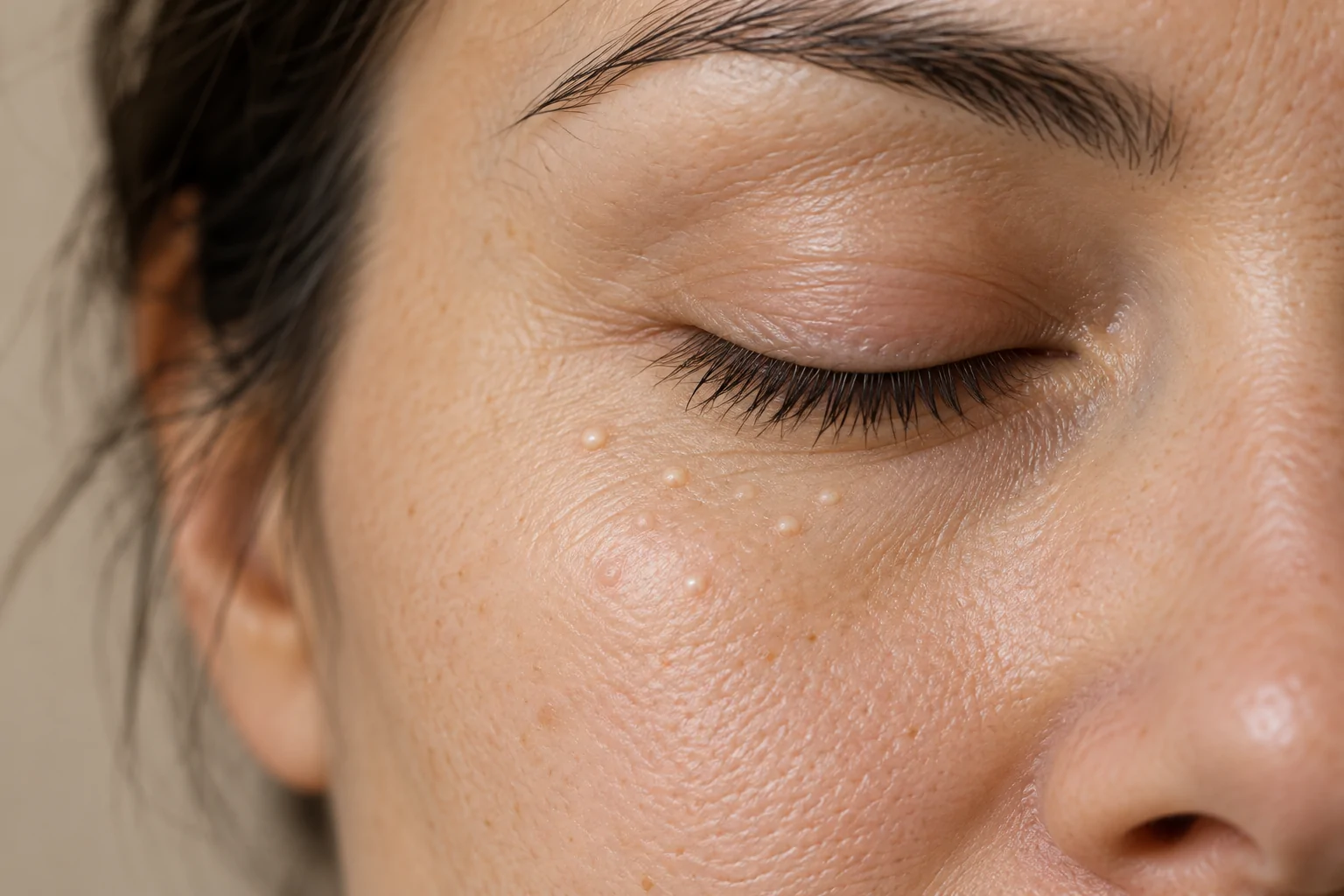
Milia are tiny cysts containing keratin, a protein naturally present in the skin. They usually look like firm, pearly-white or yellowish bumps just beneath the surface.
They are particularly common around the eyes and on the cheeks, although they can also appear on the forehead and nose. Some people have a single bump; others notice several clustered together.
Milia are sometimes called milk spots. They are not acne whiteheads, and their contents are keratin rather than oil.
Why Do Milia Develop?
Milia form when keratin becomes trapped beneath the skin’s surface. Some appear without a clear cause. Others develop in an area where the skin has been damaged and is healing, such as after a burn or blistering skin condition.
Your skin history, previous procedures and skincare products can help explain the context, but it is not always possible to identify one trigger. Milia can also occur in people who follow a careful skincare routine.
Milia or Whiteheads? How to Tell the Difference
Closed comedones, commonly called whiteheads, can resemble milia. The difference lies in their structure: milia are small keratin-filled cysts, while comedones are blocked hair follicles associated with acne.
| Feature | Milia | Whiteheads and Blackheads |
|---|---|---|
| Underlying structure | A small cyst containing keratin. | A hair follicle blocked by sebum and skin cells. |
| Appearance | Usually a distinct, pearly-white or yellowish bump. | Whiteheads are skin-coloured or whitish bumps; blackheads have a dark opening. |
| Common locations | Eyelids, under the eyes and cheeks. | Particularly the forehead and chin. |
| Connection with acne | Not an acne lesion. | A type of acne lesion. |
| Treatment approach | Professional removal may be considered according to location and number. | Usually addressed within an acne and skincare plan. |
Appearance alone is not always enough to identify a bump. This is especially important around the eyelids, where different skin lesions can look similar.
Can You Squeeze Milia?
Trying to squeeze milia often leaves the surrounding skin red or sore while the bump remains in place. Unlike a pimple, a milium does not usually have an opening through which its contents can escape.
Using a needle, scraping the surface or repeatedly applying pressure can cause infection and scarring. Professional removal offers a controlled approach after the lesion has been identified.
If you have already tried to remove a bump, avoid further attempts. Increasing redness, pain or discharge should be checked.
How Does Professional Milia Removal Work?
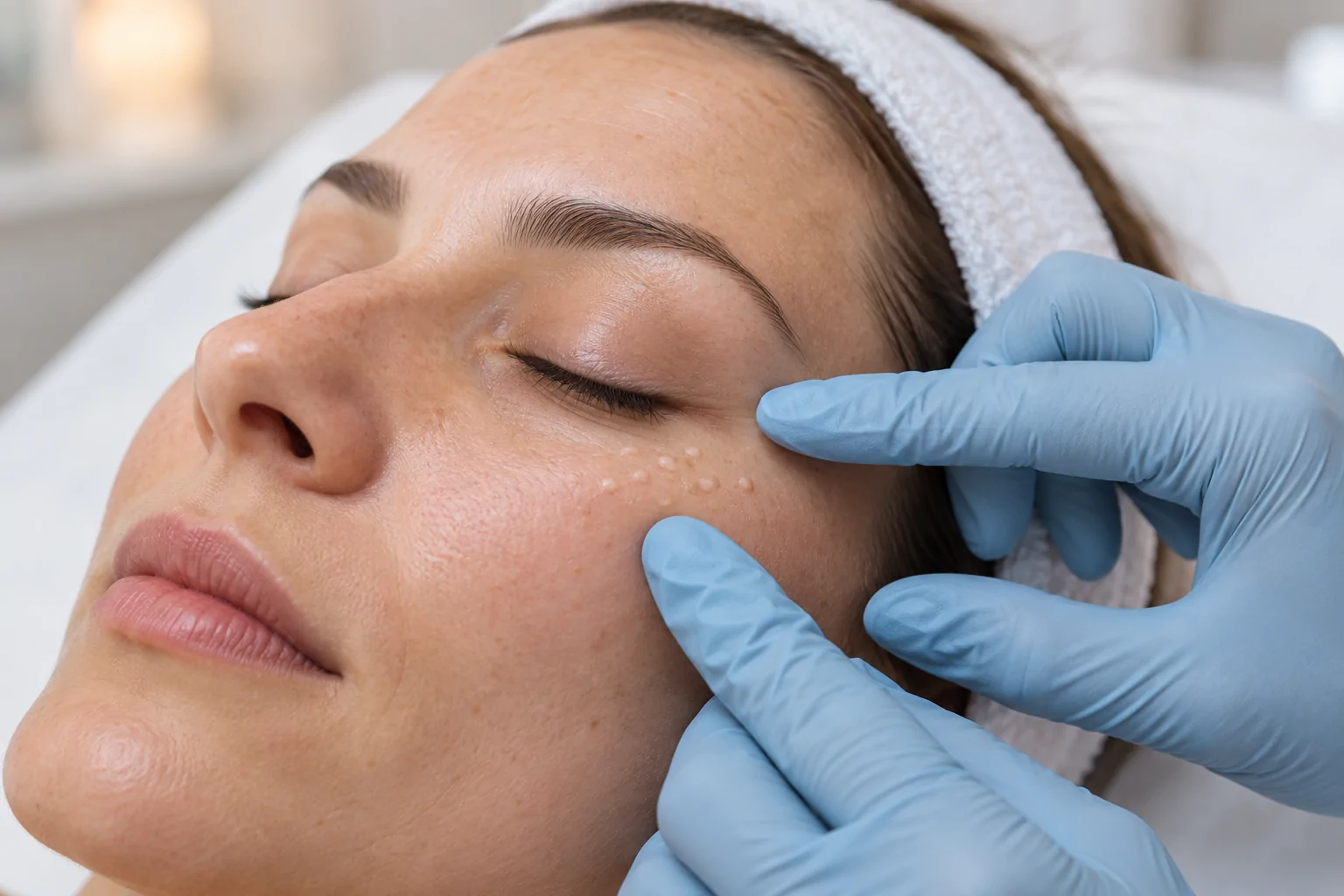
The appointment begins with a skin examination. The number of lesions, their position and the condition of the surrounding skin help determine the method.
Professional extraction is an established option. In selected cases, laser treatment may be appropriate. There is also no obligation to remove confirmed milia if they are not bothering you; some disappear naturally.
Professional Milia Extraction
Suitable milia can be removed using sterile instruments to create a small opening and release the trapped keratin. This is a professional procedure rather than something to reproduce at home.
If you also have comedones or other skincare concerns, milia extraction may be considered during a medical skincare appointment. However, routine cleansing or a facial alone will not remove every milium.
Bumps close to the eyelid require particular care. Their exact position may influence whether extraction or another approach is suitable.
Fotona Er:YAG Laser Milia Removal
Fotona Er:YAG laser provides another treatment option for selected milia cases. Er:YAG allows controlled treatment of superficial skin tissue, and its use for milia has been described in clinical publications.
One published report involved grouped milia around the eyes. It supports the possibility of treatment in a carefully selected case, but it does not mean that laser is necessary for every small white bump.
The choice between extraction and laser depends on the lesions and your skin. Treatment near the eyes also requires appropriate protection and a careful assessment of the area.
Milia Removal Around the Eyes
Under-eye milia are often noticeable because the surrounding skin is thin and the bumps catch the light. Even so, their position matters more than how visible they are.
A bump on the upper cheek and one sitting close to the eyelid margin may require different approaches. During the examination, the lesion is identified and its relationship to the eye is checked before removal is discussed.
Avoid applying strong exfoliating products to the eyelids in an attempt to clear the bumps. Ask for advice on products suitable for this sensitive area.
Does Milia Removal Hurt?
The sensation depends on the method and treatment area. Extraction may cause brief discomfort, while laser treatment feels different and may require measures to improve comfort.
Before treatment, you can discuss how the procedure will feel and what will be done to make it manageable. It is better to have this explained for your particular treatment than to expect every method to be painless.
Can Milia Removal Leave a Scar?
Scarring is possible, and no method should be described as guaranteed scar-free. Temporary redness, small crusts or a change in skin colour may also occur.
The risk depends on the procedure, your skin and the healing process. Picking at the area or trying to remove remaining bumps yourself can cause further injury.
Although an Er:YAG case report described an outcome without scarring, a single patient’s result cannot predict everyone’s experience. my.clevelandclinic.org
Aftercare Following Milia Removal
Your aftercare instructions should match the procedure you have had. Extraction and laser treatment do not necessarily have the same recovery needs.
Follow the advice given on cleansing, moisturising and sun protection. Avoid rubbing the area, squeezing nearby bumps or removing any crusts that develop.
Ask when you can wear makeup and restart products containing exfoliating acids or retinoids. If the treated area becomes increasingly painful, swollen or develops discharge, contact the treating clinician.
Can Milia Return After Treatment?
New milia can form after existing ones have been removed. A bump appearing elsewhere does not necessarily mean the original procedure failed.
If milia recur frequently, reviewing your skincare products and skin history may be useful. Persistent or unusual-looking lesions should be examined rather than repeatedly treated as milia.
Arranging Milia Removal in Istanbul
If you will be in Istanbul for a short visit, contact ahead of time and explain where the bumps are located. Mention how long they have been present and whether you have had previous treatment.
Photographs can help with an initial discussion, but they cannot replace an in-person examination. The final treatment choice is made after the skin has been assessed.
Try to leave time for aftercare and any recommended review. If you have an event or another facial treatment planned, discuss this before booking so you understand how visible redness or healing may affect your schedule.
Milia Removal Cost in Istanbul
The cost of milia removal in Istanbul depends on the number of lesions, their location and the treatment required. Removing a few isolated milia differs from treating a wider area with Er:YAG laser.
A confirmed quote should explain what is included. If removal is part of a medical skincare appointment, ask whether the skincare treatment and extraction are priced together. You can also clarify whether a follow-up visit is included.
The treatment scope and price can be confirmed after assessment.
Frequently Asked Questions
Do milia disappear without treatment?
Some do, while others remain for months or longer. Since milia are harmless, removal is not essential unless they bother you. dermnetnz.org
Are milia the same as acne?
No. Milia are keratin-filled cysts. Acne whiteheads form in blocked hair follicles. A person can have both at the same time. dermnetnz.org
Can I remove milia at home?
Home extraction is not recommended. Squeezing, piercing or scraping the skin can cause infection and permanent scarring. my.clevelandclinic.org
Will a facial get rid of milia?
Routine cleansing and exfoliation will not remove every milium. A separate professional extraction procedure may be needed.
Is laser milia removal better than extraction?
There is no single best method for every patient. The number and location of the lesions, together with your skin, guide the choice. Laser is an option for selected cases rather than a requirement.
Can milia be removed in one session?
Some cases may be addressed in one appointment. The number of lesions and the treatment area can affect whether further treatment is needed. This should be discussed after examination.
Can I wear makeup immediately afterwards?
This depends on the method and whether the skin surface has been opened or treated with laser. Follow the specific instructions provided after your procedure.
Can I book milia removal while visiting Istanbul?
You can arrange an assessment during your visit. Booking ahead and allowing time for any recommended aftercare or follow-up will help you organise the appointment.

Content Responsibility and Medical Review

Medical expert
Specialist in Plastic, Reconstructive and Aesthetic Surgery
Leyla Arvas graduated from Istanbul University, Istanbul Faculty of Medicine in 1998 and is a specialist in Plastic, Reconstructive and Aesthetic Surgery.
Dr. Leyla Arvas sees patients at her private practice and performs her surgeries at Acıbadem Hospital and Memorial Hospital, both of which are accredited by the Joint Commission International (JCI).
Medical content lead for Milia Removal: Op. Dr. Leyla ARVAS - EN
Last updated: